'/%3E%3Cg transform='translate(100 100) scale(1)' fill='none'%3E%3Cpath d='M12.7998 6H87.2002C89.4486 6 91.1052 6.00048 92.4141 6.10742C93.7169 6.2139 94.6319 6.42335 95.4053 6.81738C96.8163 7.5364 97.9636 8.68371 98.6826 10.0947C99.0767 10.8681 99.2861 11.7831 99.3926 13.0859C99.4995 14.3948 99.5 16.0514 99.5 18.2998V82.0889C99.5 84.3373 99.4995 85.9938 99.3926 87.3027C99.2861 88.6057 99.0767 89.5206 98.6826 90.2939C97.9636 91.705 96.8163 92.8522 95.4053 93.5713C94.6319 93.9653 93.7169 94.1748 92.4141 94.2812C91.1052 94.3882 89.4486 94.3887 87.2002 94.3887H12.7998C10.5514 94.3887 8.89483 94.3882 7.58594 94.2812C6.28306 94.1748 5.36806 93.9653 4.59473 93.5713C3.18369 92.8522 2.03638 91.705 1.31738 90.2939C0.923328 89.5206 0.713894 88.6057 0.607422 87.3027C0.500478 85.9938 0.5 84.3373 0.5 82.0889V18.2998C0.5 16.0514 0.500481 14.3948 0.607422 13.0859C0.713899 11.7831 0.923349 10.8681 1.31738 10.0947C2.0364 8.68371 3.18371 7.5364 4.59473 6.81738C5.36806 6.42335 6.28305 6.2139 7.58594 6.10742C8.89483 6.00048 10.5514 6 12.7998 6Z' stroke='%239C4A31'/%3E%3Cpath fill='%239C4A31' d='M10 53.4151V81C10 83.2091 11.7909 85 14 85H87L35.4043 33.7962C33.8447 32.2485 31.3286 32.2485 29.769 33.7962L10 53.4151Z'/%3E%3Ccircle cx='83' cy='26' r='10' fill='%239C4A31'/%3E%3C/g%3E%3C/svg%3E)
Tagline
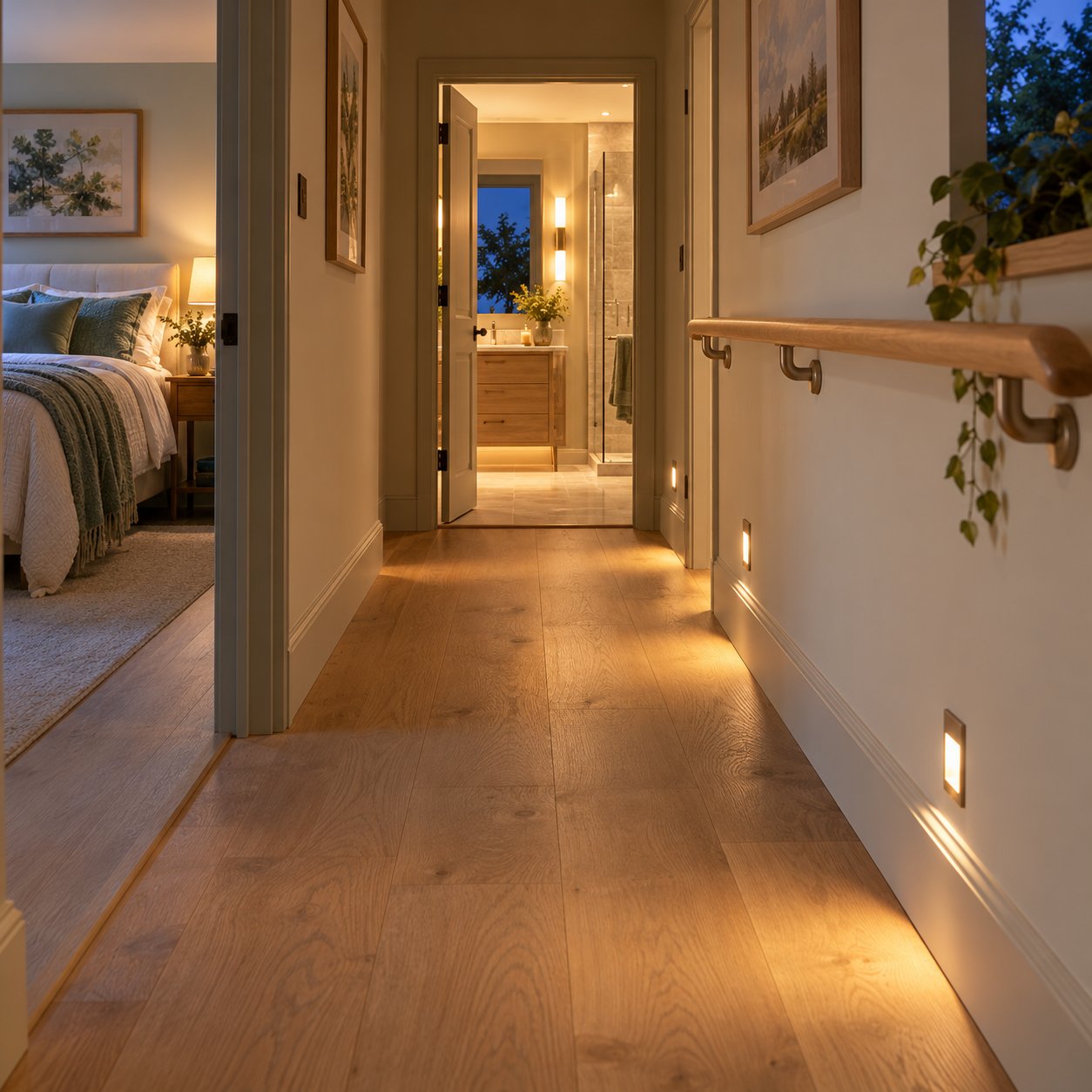
Improve visibility without making the house feel clinical
Try task lighting, accessible switches and gentle nighttime illumination. Choose consistent light levels and reduce glare; brighter is not always better.
check_circle
Light the task
Add focused light at counters, reading chairs and work surfaces without shining directly into the eyes.
lightbulb
Light the route
Consider motion-activated nightlights or well-placed switches along bedroom-to-bathroom and entrance routes.
handyman
Reduce glare and surprises
Use diffused lighting, make step edges visible and avoid abrupt changes between very bright and very dark areas.
'/%3E%3Cg transform='translate(75 75) scale(1.5)' fill='none'%3E%3Cpath d='M12.7998 6H87.2002C89.4486 6 91.1052 6.00048 92.4141 6.10742C93.7169 6.2139 94.6319 6.42335 95.4053 6.81738C96.8163 7.5364 97.9636 8.68371 98.6826 10.0947C99.0767 10.8681 99.2861 11.7831 99.3926 13.0859C99.4995 14.3948 99.5 16.0514 99.5 18.2998V82.0889C99.5 84.3373 99.4995 85.9938 99.3926 87.3027C99.2861 88.6057 99.0767 89.5206 98.6826 90.2939C97.9636 91.705 96.8163 92.8522 95.4053 93.5713C94.6319 93.9653 93.7169 94.1748 92.4141 94.2812C91.1052 94.3882 89.4486 94.3887 87.2002 94.3887H12.7998C10.5514 94.3887 8.89483 94.3882 7.58594 94.2812C6.28306 94.1748 5.36806 93.9653 4.59473 93.5713C3.18369 92.8522 2.03638 91.705 1.31738 90.2939C0.923328 89.5206 0.713894 88.6057 0.607422 87.3027C0.500478 85.9938 0.5 84.3373 0.5 82.0889V18.2998C0.5 16.0514 0.500481 14.3948 0.607422 13.0859C0.713899 11.7831 0.923349 10.8681 1.31738 10.0947C2.0364 8.68371 3.18371 7.5364 4.59473 6.81738C5.36806 6.42335 6.28305 6.2139 7.58594 6.10742C8.89483 6.00048 10.5514 6 12.7998 6Z' stroke='%239C4A31'/%3E%3Cg fill='%239C4A31' stroke='%239C4A31' stroke-width='2.25944' stroke-linecap='round' stroke-linejoin='round'%3E%3Cpath d='M60.4338 41.7375C60.433 47.4978 55.7618 52.1689 50.0015 52.1698C44.2405 52.1698 39.5701 47.4983 39.5693 41.7375C39.5693 35.976 44.24 31.3052 50.0015 31.3052C55.7624 31.3061 60.4338 35.9765 60.4338 41.7375Z'/%3E%3Cpath d='M50 52.7727C58.094 52.7727 65.4219 58.1628 67.839 65.8774C68.0452 66.536 67.9262 67.2524 67.5177 67.8086C67.1091 68.3649 66.4605 68.6947 65.7702 68.6947H34.2298C33.5395 68.6947 32.891 68.3649 32.4823 67.8086C32.0739 67.2524 31.9548 66.536 32.161 65.8774C34.5782 58.1628 41.906 52.7727 50 52.7727Z'/%3E%3C/g%3E%3C/g%3E%3C/svg%3E)