Start Here · Something is changing
You have noticed something and you are not sure what it means
A slower walk, a bill that went unpaid, a room that stopped being used. It is worth looking at. It is not worth panicking about.
A slower walk, a bill that went unpaid, a room that stopped being used. It is worth looking at. It is not worth panicking about.
The changes that matter are rarely dramatic. They repeat: the same step taken carefully, the same invitation declined, the same story told twice. Noticing them early is the advantage — it means the fixes can stay small, reversible and cheap.
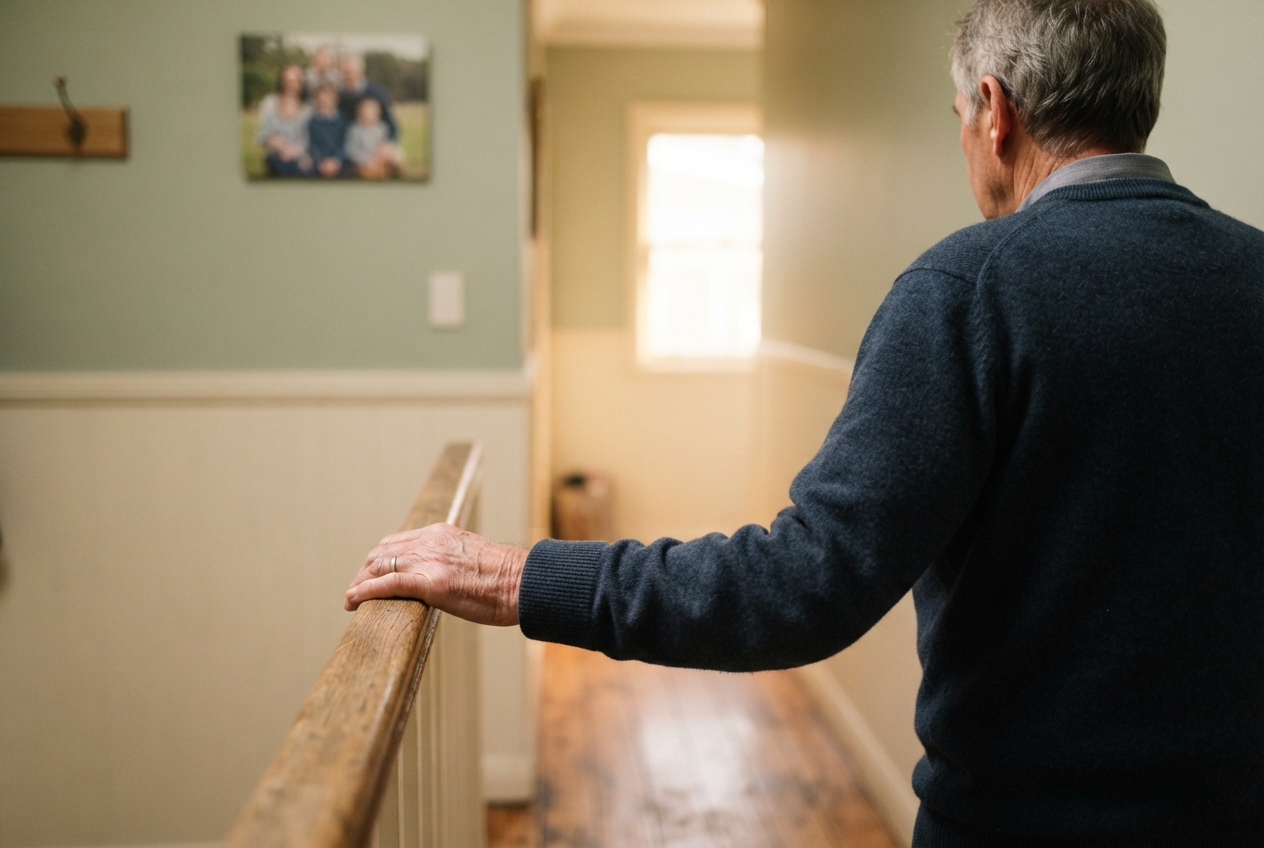
One of these is worth doing this week. The other two can wait until you have a clearer picture, and they are easier once you do.
Dates and details, not impressions. It makes the conversation with them, and later with a professional, much shorter and far less arguable.
"How are you finding the stairs these days?" gets an answer. "What happens if you fall?" closes the door. Can wait until you are not worried in the moment.
Rooms they avoid, meals they skip, calls they no longer make. A stopped habit usually tells you more than any single incident.
Three next steps that match what you are seeing, cheapest and least disruptive first.
The bathroom is where most of it starts, and where the cheapest fixes do the most. What to notice, and what helps first.
What genuinely reduces fall risk at home, what is mostly marketing, and what to do after a near miss.
An occupational therapist watches how someone actually lives and spots what family members walk past every week.
Fifteen plain questions about the home and the day-to-day. It returns a short list of what deserves attention first, so the next conversation you have has something concrete in it rather than a feeling.