What may help
Four things worth looking at, starting with the routes you use every day.
Clear the routes used most often
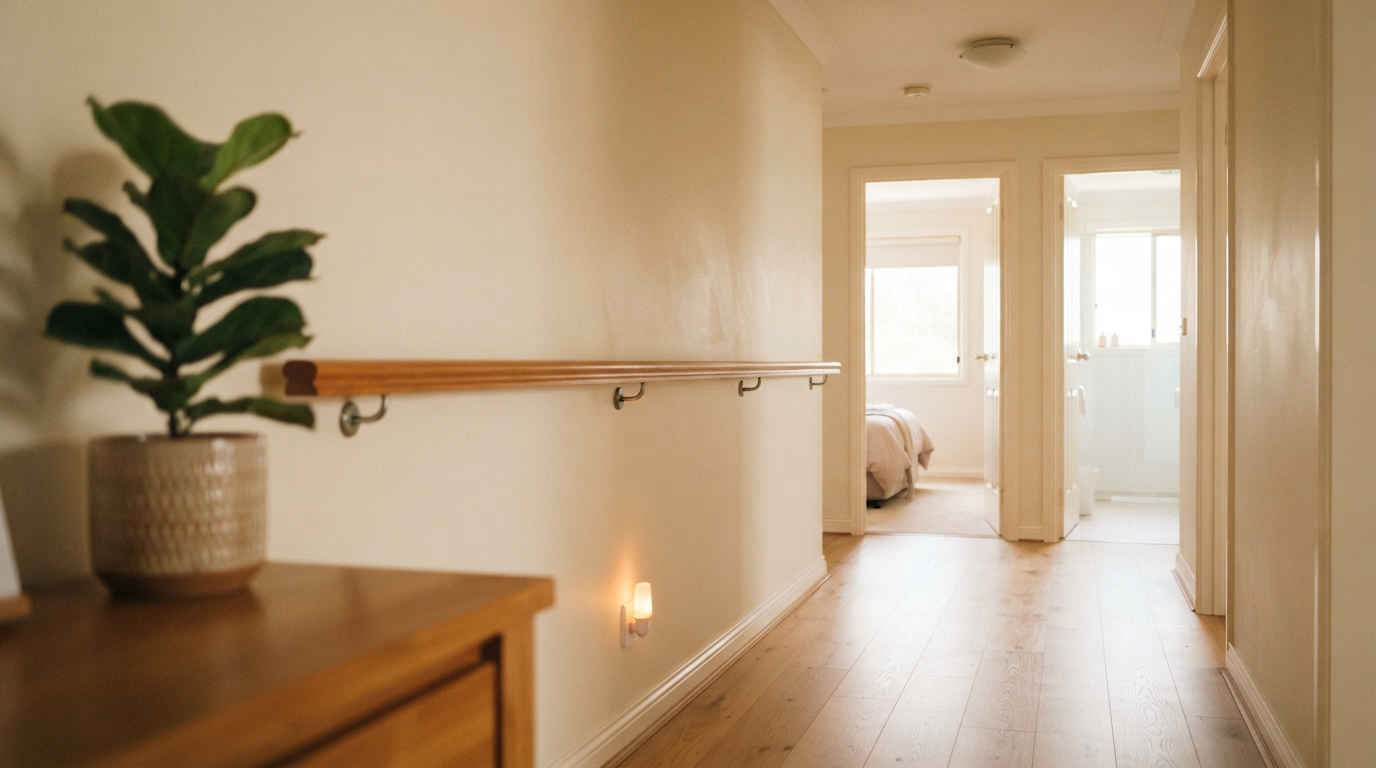
Begin with the paths between the bed, bathroom, kitchen and favorite chair. Move cords and clutter out of the way, address loose rugs and keep everyday items within comfortable reach.
Preserve familiar belongings where possible. Often, changing their placement makes a route easier to use.
Make lighting work throughout the day
Look at entrances, stairs and the nighttime route to the bathroom. Make sure lights can be switched on before entering a dark area.
Nightlights or motion-activated lighting may help. Check that the light reveals changes in floor level without creating distracting glare or deep shadows.
Add dependable support
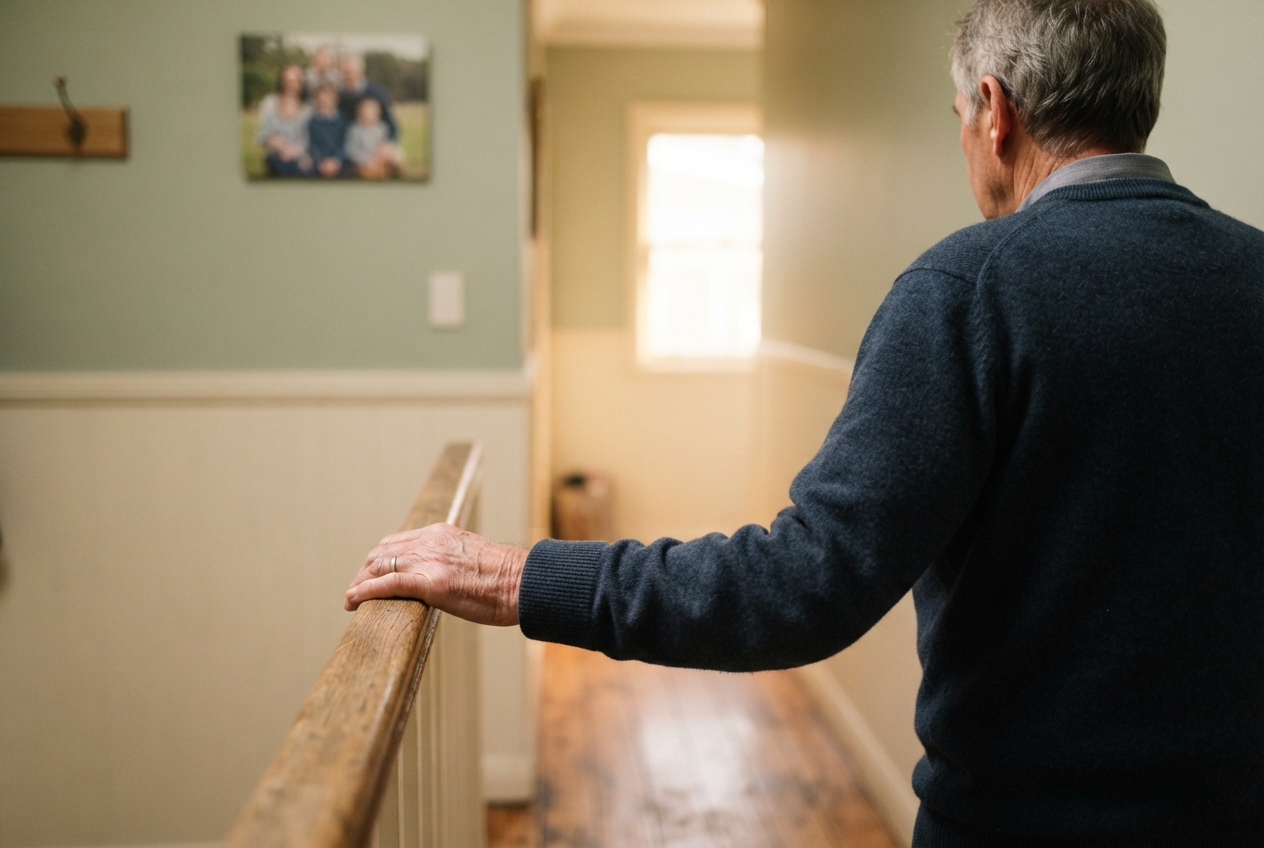
Properly installed grab bars and secure stair handrails can provide support where it is needed. Their position should suit the person and the movement involved.
The CDC recommends addressing trip hazards, improving lighting, adding bathroom grab bars and providing railings on both sides of stairs.
Consider the person as well as the room
Balance, strength, vision, footwear and medicines can affect steadiness. A clear floor alone may not address the whole concern.
Discuss dizziness, unsteadiness and changes in movement with a healthcare professional. Ask a doctor or pharmacist to review medicines, including nonprescription products, rather than changing them yourself.
Appropriate strength and balance activities can also be part of a prevention plan. A healthcare professional can help identify a suitable starting point.
'/%3E%3Cg transform='translate(100 100) scale(1)' fill='none'%3E%3Cpath d='M12.7998 6H87.2002C89.4486 6 91.1052 6.00048 92.4141 6.10742C93.7169 6.2139 94.6319 6.42335 95.4053 6.81738C96.8163 7.5364 97.9636 8.68371 98.6826 10.0947C99.0767 10.8681 99.2861 11.7831 99.3926 13.0859C99.4995 14.3948 99.5 16.0514 99.5 18.2998V82.0889C99.5 84.3373 99.4995 85.9938 99.3926 87.3027C99.2861 88.6057 99.0767 89.5206 98.6826 90.2939C97.9636 91.705 96.8163 92.8522 95.4053 93.5713C94.6319 93.9653 93.7169 94.1748 92.4141 94.2812C91.1052 94.3882 89.4486 94.3887 87.2002 94.3887H12.7998C10.5514 94.3887 8.89483 94.3882 7.58594 94.2812C6.28306 94.1748 5.36806 93.9653 4.59473 93.5713C3.18369 92.8522 2.03638 91.705 1.31738 90.2939C0.923328 89.5206 0.713894 88.6057 0.607422 87.3027C0.500478 85.9938 0.5 84.3373 0.5 82.0889V18.2998C0.5 16.0514 0.500481 14.3948 0.607422 13.0859C0.713899 11.7831 0.923349 10.8681 1.31738 10.0947C2.0364 8.68371 3.18371 7.5364 4.59473 6.81738C5.36806 6.42335 6.28305 6.2139 7.58594 6.10742C8.89483 6.00048 10.5514 6 12.7998 6Z' stroke='%23D4B1A6'/%3E%3Cpath fill='%23D4B1A6' d='M10 53.4151V81C10 83.2091 11.7909 85 14 85H87L35.4043 33.7962C33.8447 32.2485 31.3286 32.2485 29.769 33.7962L10 53.4151Z'/%3E%3Ccircle cx='83' cy='26' r='10' fill='%23D4B1A6'/%3E%3C/g%3E%3C/svg%3E)